9 Questions to Ask Before Buying Plywood (Buyer’s Guide)
Don’t buy plywood without asking these questions. Our guide covers 9 points about grade, treatment, and warranty to ensure you get the right plywood.
Why These 9 Questions Are Essential Before Buying Plywood
In India, where homes face everything from relentless monsoons to termite infestations, choosing the wrong plywood can turn a dream kitchen into a warped nightmare. As an industry veteran with decades tracking plywood trends across Indian markets—from Mumbai's humid bustle to Chennai's coastal salt air—I've seen buyers regret rushed decisions time and again. The good news? Arming yourself with these 9 targeted questions flips the script, ensuring you select plywood that lasts 15-20 years under real Indian conditions.
These aren't random checks; they're drawn from practical failures I've analyzed, like cabinets delaminating in Bangalore apartments or wardrobes buckling in Delhi summers. Ask them at your dealer's showroom or directly from suppliers. Why start here? Because 80% of plywood issues stem from mismatched grades or untreated cores, not poor installation. In South India especially, where modular kitchens dominate urban homes and CNC-cut panels are standard, skipping these questions means costly callbacks for carpenters.
We'll dive into each question next, explaining what to listen for, red flags to dodge, and why it matters for your build. By the end, you'll have a decision framework to match plywood to your needs—be it a moisture-heavy bathroom vanity or a termite-prone bedroom cupboard. This guide equips you to negotiate better, spot dealer tricks, and build confidently, saving thousands in repairs down the line.
1. What IS Grade Does This Plywood Carry?
Indian Standards (IS) grades like IS:303 for moisture-resistant (MR) plywood or IS:710 for boiling water-resistant (BWR) set the baseline for quality. Dealers often gloss over this, pushing generic sheets, but insisting on the exact IS certification reveals if it's lab-tested for strength and durability. MR suits dry interiors like living rooms, holding up under 24-hour water soak with minimal swelling—around 10-12% thickness increase. BWR steps up to 72-hour resistance, ideal for kitchens where spills and steam are daily battles.
Why drill down? In humid Indian climates, sub-grade plywood swells 20-30% faster, leading to joint failures in humidified homes. South Indian buyers, facing 80-90% monsoon humidity, need BWR or better to prevent fungal blooms on undersides. Ask for the test report; genuine ones list delamination resistance post-cycles of boiling and drying. Edge case: If your carpenter uses CNC routing, confirm the grade supports precise cuts without chipping—lower grades splinter under high-speed bits.
Real-world pitfall: A Kerala modular kitchen I inspected used ungraded "commercial" plywood; within a year, monsoon vapors warped drawers, costing Rs 50,000 in fixes. Trade-off? Higher IS grades cost 20-30% more upfront but halve lifetime repairs. Listen for vagueness like "it's good quality"—demand specifics. This question alone filters 50% of subpar stock from dealer yards.
2. Is It MR, BWR, or BWP Grade—And Why Does Moisture Resistance Matter?
Beyond basic IS, the glue type defines true performance: MR (moisture-resistant) for low-humidity zones, BWR for moderate exposure, and BWP (boiling water-proof, aka marine) for wet areas. BWP endures repeated boiling without glue line failure, critical where plywood meets water—like bathroom shutters or coastal verandas. In India, where kitchens double as wash zones, BWR minimum prevents the common "peeling edges" after two monsoons.
This matters intensely in India because our 70-90% average humidity dwarfs temperate markets. Untreated MR in a Mumbai flat? Expect bubbling glue lines by Diwali. South India's coastal belt amplifies this—salt-laden air accelerates corrosion of metal fittings attached to plywood, so BWP's phenolic resins bond tighter. Ask: "Show me the boil test video or cycle count." Genuine BWP survives 72+ hours boiling; fakes delaminate sooner.
Buyer scenario: A Hyderabad family chose MR for their open kitchen; post-monsoon, cabinets sagged under humidity-induced swelling. Carpenter insight: Always pair grade with ventilation—BWR shines in exhaust-fan kitchens but falters sans airflow. Trade-off: BWP adds 40-50% to cost but extends life to 25 years in harsh spots. Not for everywhere—overkill in bedrooms wastes money. Probe supplier logic for your use case; it exposes upsell tactics.
3. What Is the Exact Thickness and Tolerance Level?
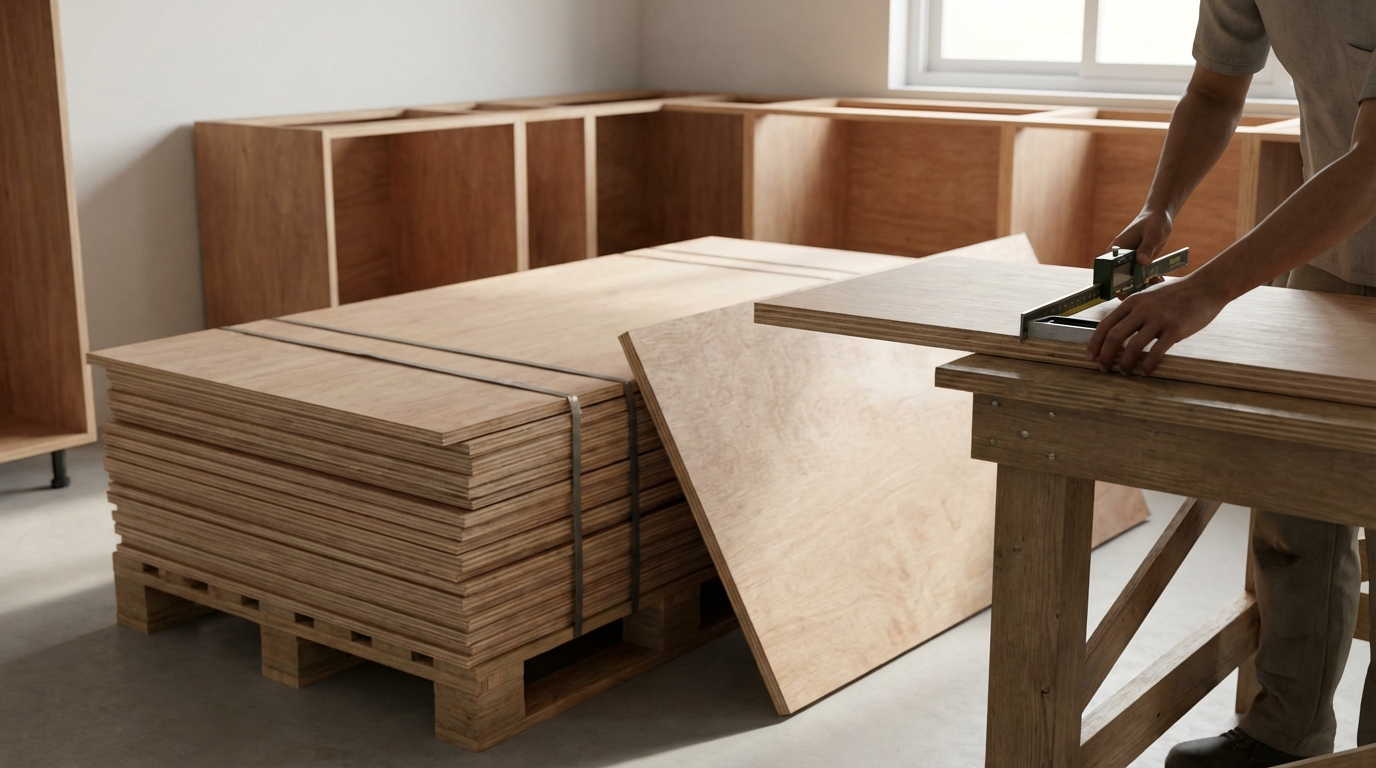
Plywood sheets labeled 18mm might measure 16.5mm at edges due to sanding losses—a tolerance issue that dooms cabinets to sagging. Demand nominal vs. actual thickness, plus tolerance specs like ±0.5mm for premium boards. Thinner cores flex under load; in Indian homes with heavy brassware atop almirahs, 18mm+ with tight tolerance prevents bowing over time.
In dealer-driven buys, thickness fudging is rife—thinner sheets sell cheaper per sq ft. Test with a Vernier caliper at multiple spots; uniform thickness signals quality pressing. Why India-specific? Overloaded furniture from festive shopping stresses plywood; loose tolerance amplifies vibrations in earthquake-prone Gujarat. South Indian CNC shops thrive on precise tolerance—off-spec boards jam routers, inflating cuts by 10-15%.
Failure case: A Pune builder used 12mm "18mm" plywood for beds; legs buckled under family weight. Carpenter tip: Cross-check density too—600-700 kg/m³ resists dents. Trade-off: Tighter tolerance raises price 10-15%, but evens joints, cutting polishing labor. Ask for batch samples; measure yourself. This weeds out 30% of yard stock masquerading as premium.
4. What Type of Core Wood Is Used, and How Many Plies?
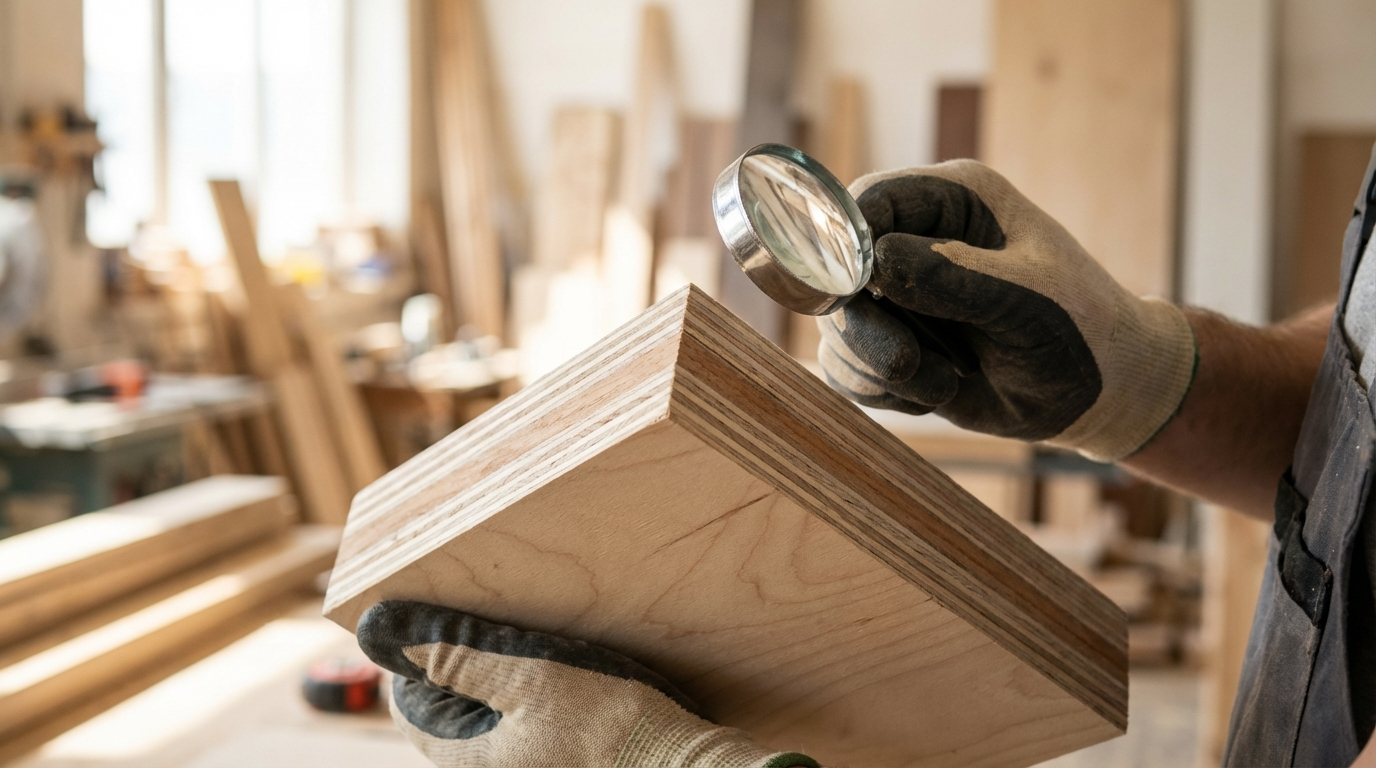
Hardwood cores like poplar or eucalyptus outperform softwood in screw-holding—up to 200kg shear strength vs. 100kg. Face veneers get glamour, but the core (70% volume) dictates longevity. Aim for 7-9 plies in 18mm sheets; fewer means weaker glue lines prone to telegraphing knots.
Indian markets favor imported poplar for density, but local gurjan risks voids. Squeeze edges for air pockets—solid cores thud dully. In termite-heavy North India, hardwood resists tunneling better. South context: Monsoon-swollen softwood cores delaminate faster in modular setups. Ask: "Percentage of heartwood vs. sapwood?" Heartwood >70% wards decay.
Mistake alert: Buyers ignore plies, buying 5-ply "18mm" that snaps under doorslides. Scenario: Chennai coastal home—salty air rotted sapwood core in 3 years. Trade-off: More plies add weight/cost but boost impact resistance for kids' rooms. Dealers downplay; insist on cross-section view. This question unveils hidden shortcuts.
5. Is It Properly Treated for Termites and Borers?
Termite-proofing via preservatives like copper chrome boron penetrates 10-15mm deep, unlike surface sprays that fail post-install. India's 60% termite-risk zones demand this—untreated plywood tunnels in 6-18 months. Ask for treatment certificate detailing chemical retention levels.
Why critical here? Sub-tropical soils breed colonies; South India's laterite boosts acidity, accelerating attacks. Modular kitchens hide tubes in crevices—treated plywood starves them. Red flag: "Naturally resistant" claims—most woods aren't. Test: Gnaw marks absent on samples.
Failure: Delhi wardrobe riddled post-warranty. Carpenter view: Elevate off floors, but treatment buys time. Trade-off: Chemicals raise health flags indoors—opt mild for kids' spaces. Coastal edge: Salt enhances borers; double-treatment needed. Grill on process—pressure vs. dip—for penetration proof.
6. What Moisture and Fungal Resistance Treatments Are Applied?
Beyond glue, anti-fungal copper-ammonia or boric treatments curb black mold in 90% RH. India's monsoons spawn spores; untreated faces bloom in bathrooms. Query retention values—higher wards warping.
South India spotlight: Chennai humidity + poor ventilation = mold magnets. CNC edges expose untreated innards—sealed boards fare best. Ask: "Post-soak fungal test results?" Zero growth post-28 days signals quality.
Case: Bangalore kitchen mold shut down cooking. Trade-off: Over-treatment yellows veneer—balance for aesthetics. Dealer insight: Pair with dehumidifiers. This prevents 40% of early failures.
7. What Warranty Details and Coverage Apply?
Warranties span 5-25 years, but read fine print: Delamination only? Termites included? Prorate after year 5? Insist on pro-rated full replacement for boil-proof claims.
Indian reality: Dealers vanish post-sale; branded names enforce better. South modular boom demands site-inspected claims. Ask: "Claim process and lab tie-up?"
Pitfall: Verbal promises voided. Trade-off: Longer warranty signals premium glue but costs more. Framework: Match to exposure—10 years for kitchens.
8. What Is the Formaldehyde Emission Level?
E0/E1 levels (<0.5ppm) suit bedrooms; E2 risks irritation. India's VOC-sensitive homes need low-emission for kids.
Monsoon traps fumes; test via smell—sharp = high. South CNC dust amplifies exposure.
Mistake: Ignoring for cost. Trade-off: Low-emission pricier but healthier long-term.
9. Is It Optimized for CNC Machining and Edge Banding?
CNC-ready boards have uniform density, no knots for clean cuts. Edge banding grips tight on smooth edges.
South India's CNC dominance—mismatched boards waste 20% material. Ask for machinability score.
Case: Warped cuts in Kochi kitchens. Trade-off: Specialized costlier but labor-saving.
Common Mistakes Indian Buyers and Carpenters Make with Plywood
Top error: Prioritizing price over grade—Rs 50/sqft MR fails in Rs 70 BWR spots. Dealers push stock; buyers bite. Carpenter blunder: Mixing grades in one job, causing uneven expansion. India twist: Ignoring humidity mapping—North dry OKs MR, South needs BWP. South-specific: Coastal salt ignored, fittings corrode plywood. Fix: Pre-soak test samples. Another: Skipping thickness checks, leading to sagging shelves. Narrative: Coimbatore family saved Rs 20k by rejecting thin "premium." Learn: Always multi-point verify.
Trade-Offs and Limitations in Plywood Choices
Premium BWP excels wet but dents easier than MR. More plies = heavier transport. Low-emission sacrifices glue strength slightly. India edge: Cost vs. lifespan—cheap fails monsoon 2.0. When not BWP? Dry wardrobes. Framework: Balance exposure, budget, aesthetics.
Your Plywood Decision Framework
Match needs systematically:
| Use Case | Grade | Core/Ply | Treatment Priority | Warranty Min |
|---|---|---|---|---|
| Bedroom Almirah | MR/BWR | Hardwood/7+ | Termite | 10 yrs |
| Kitchen Cabinet | BWR/BWP | Poplar/9+ | Moisture/Fungal | 15 yrs |
| Bathroom Vanity (South) | BWP | Dense/11+ | All + Salt Resist | 20 yrs |
| CNC Modular | BWR+ | Uniform/9+ | Low Emission | 12 yrs |
Use this: Score your project, pick top match. Why India? Customizes for regional woes.
Frequently Asked Questions About Buying Plywood
Can I Use MR Plywood in Indian Kitchens?
MR works in well-ventilated, low-spill kitchens but risks glue failure in steam-heavy ones. Opt BWR for safety—expansion under 8% vs. MR's 12%. South modular? No, upgrade.
How Do I Spot Fake Termite Treatment?
No deep penetration proof or vague claims signal fakes. Demand cross-sections; untreated shows white core.
What's Better: More Plies or Thicker Veneers?
Plies for strength; veneers for finish. 9-ply 18mm beats 5-ply fancy face.
Does Warranty Cover Installation Issues?
Rarely—focus delam-only. Verify exclusions.
Is Imported Core Always Superior?
Denser yes, but local treated matches if quality-pressed.
How to Handle South India Monsoon Humidity?
BWP + ventilation + elevation. Avoid ground contact.
Should I Buy from Dealers or Direct?
Dealers offer variety; direct cuts middlemen but verify stock.
Disclaimer: This content is provided for general informational purposes based on industry practices and publicly available information. Product specifications, standards, prices, and availability may vary by manufacturer, region, and time. Readers should independently verify details with manufacturers, dealers, or qualified professionals before making purchase or construction decisions.
Want Plywood Suggestions?
Share a few details and a Apple Ply specialist will suggest suitable brands and connect you to responsive dealers.