Plywood Sheet Sizes & Price Chart – Standard Dimensions in India
Standard plywood sheet dimensions in India (8x4, 6x4, etc) with typical prices. Includes a size-vs-price chart and tips on choosing the right sheet.
Quick Answer
Standard plywood sheet sizes in India center around 8x4 feet as the most common, followed by 6x4 feet, 7x4 feet, 8x3 feet, and 6x3 feet. These dimensions suit typical Indian home layouts, carpentry workflows, and transport logistics. Typical prices range from ₹500 to ₹3,500 per sheet, varying by thickness (3mm to 25mm), grade (commercial MR to marine BWP), city tier, and dealer margins. Always match size to project scale to minimize wastage—larger sheets reduce seams but increase handling challenges in humid conditions.
- Most popular: 8x4 ft for wardrobes, cabinets; 6x4 ft for shelves, partitions.
- Thickness norms: 18mm/19mm for structural use; 6-12mm for paneling.
- Price drivers: ₹800-₹1,800 (8x4, 18mm commercial) in Tier 1 cities; add 20-30% for coastal areas or premium grades.
- Key tip: Opt for full sheets over pre-cut to verify quality; calculate rooms' dimensions first.
- India-specific: Account for 5-10% extra for carpenter cuts and monsoon storage.
Standard Plywood Sheet Sizes Available in India
In the Indian market, plywood sheet sizes follow practical standards shaped by decades of carpentry traditions, home construction norms, and logistics realities. The 8 feet by 4 feet (2440mm x 1220mm) dominates because it aligns perfectly with standard door heights (7-8 ft), wardrobe depths (2 ft per side), and truck loading efficiencies. This size covers most modular kitchen shutters, bed frames, and false ceilings without excessive trimming, which saves labor costs in a carpenter-driven ecosystem.
Next in line is the 6x4 feet (1830mm x 1220mm) sheet, ideal for compact spaces like apartments in Mumbai or Delhi high-rises. It fits narrower walls, bathroom vanities, or loft beds where full 8x4 would overhang and waste material. Variations like 7x4 feet offer a middle ground for sloped roofs or L-shaped kitchens, while 8x3 feet and 6x3 feet cater to height-constrained areas such as study tables or TV units. Less common are square-ish 4x4 or elongated 10x4, reserved for industrial or custom millwork.
These sizes aren't arbitrary— they stem from core veneer dimensions (typically 4 ft wide logs) and pressing efficiencies in factories across Kerala, Punjab, and Gujarat. In practical terms, an 8x4 sheet yields about 30-32 sq ft usable after edging, enough for two wardrobe sides plus a back panel. For Indian buyers, always measure your space in feet (not meters) to match dealer stocks, as mismatches lead to 15-20% wastage. Coastal regions like Chennai might stock more 6x3 for humidity-warped storage, while northern dealers prioritize 8x4 for larger bungalows.
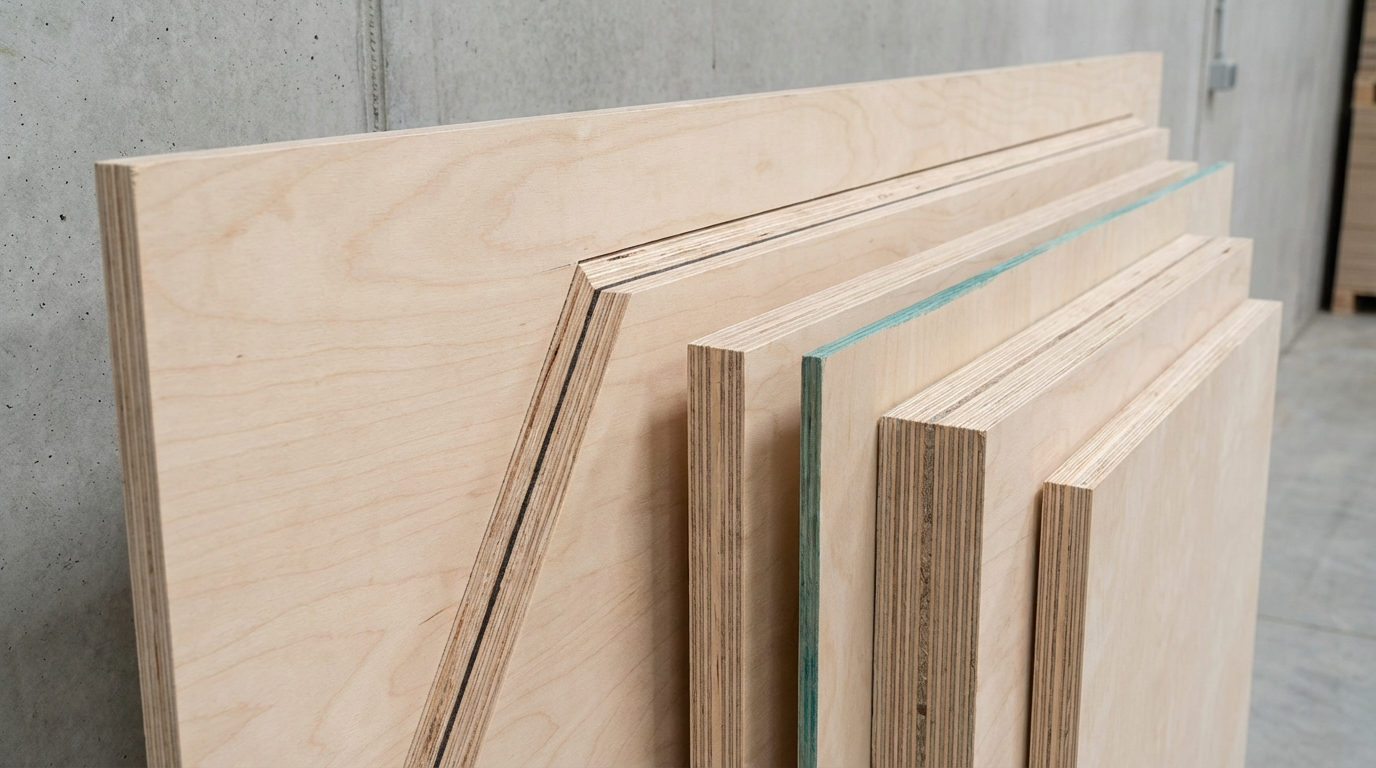
Thickness pairs with size: thin 3-6mm for formwork or curves; 9-12mm for shelves; 15-19mm for load-bearing like flooring; 21-25mm for heavy beams. Indian naming quirks include "18mm" often meaning 17-18mm actual due to sanding tolerances—check calipers at purchase. Why does this matter in India? Monsoon humidity swells edges unevenly on oversized sheets if not edge-sealed promptly, risking delamination in un-AC homes.
Understanding Plywood Thickness in Relation to Sheet Sizes
Sheet size and thickness interplay critically for strength and application in Indian contexts. A 8x4 in 6mm suits lightweight paneling but sags under bookshelves; the same size in 18mm holds 100-150kg distributed load for kitchen platforms. Thickness determines screw-holding (thicker grips better in particleboard joints) and deflection under humidity—vital in 80% RH Mumbai summers.
Common thicknesses scale with size: smaller 6x3 sheets often in 9-12mm for agility; full 8x4 in 15-25mm for furniture carcasses. Factory tolerances allow ±0.5-1mm variance, so a labeled 19mm might measure 18.5mm—practical for CNC routing but risky for precise modular fits. In trade terms, "boiler quality" (BWP) thicknesses resist boiling tests, suiting coastal kitchens, while MR grades suffice inland.
Indian carpenters prefer even thicknesses for symmetry: pair 18mm sides with 12mm backs to balance weight. Over-speccing thickness on large sheets hikes costs 30-50% without proportional gains, as rigidity plateaus beyond 19mm for residential use. Edge cases include laminated finishes needing 0.8mm tolerance or termite-prone areas demanding full 25mm cores. Always factor carpenter feedback— they optimize cuts across multiple sheets to minimize offcuts, turning a 8x4 into efficient panels for a 10x10 room.
Plywood Sheet Sizes Price Chart: Typical Ranges Across Grades
Plywood prices fluctuate based on size, thickness, glue type (MR, BWR, BWP), wood species (hardwood vs softwood), and regional factors like GST (18%), transport from plywood hubs (Kerala to North adds ₹100-200/sheet), and dealer markups (10-25%). In Tier 1 cities like Bangalore or Hyderabad, expect mid-range for commercial grades; Tier 2/3 add 15-20% premiums due to logistics. These are indicative 2026 ranges for plain brown surfaces—laminated or veneered add ₹300-800.
Prices assume standard quality without defects; premium imports or eco-certifications push upper limits. Larger sheets cost more per sq ft initially but economize on seams (fewer joints mean less swelling risk). Why the spread? Glue quality (urea vs phenolic) doubles marine grades; core density varies by log sourcing amid supply chain shifts.
| Sheet Size (ft) | Thickness (mm) | Commercial MR (₹/sheet) | BWR Grade (₹/sheet) | BWP/Marine (₹/sheet) |
|---|---|---|---|---|
| 8x4 | 6 | 550-850 | 750-1,100 | 950-1,400 |
| 8x4 | 12 | 850-1,300 | 1,200-1,700 | 1,500-2,200 |
| 8x4 | 18 | 1,200-1,900 | 1,700-2,500 | 2,200-3,200 |
| 6x4 | 12 | 650-1,000 | 900-1,400 | 1,200-1,800 |
| 6x4 | 18 | 950-1,500 | 1,300-2,000 | 1,700-2,600 |
| 8x3 / 6x3 | 18 | 900-1,400 | 1,200-1,900 | 1,600-2,400 |
Use this chart as a negotiation baseline—bulk buys (10+ sheets) shave 10-15%; monsoon peaks add 5-10%. Verify sheet weight (heavier often denser cores) and stamp markings for grade claims.
How to Choose the Right Plywood Sheet Size: Decision Framework
Selecting plywood sheet sizes boils down to a step-by-step framework tailored to Indian home projects. Start with room measurements: add 10-15% buffer for cuts and errors. Sketch layouts—8x4 for spans over 4 ft, 6x4 for under 3 ft. Match carpenter tools (panel saws handle 8x4 best). Budget check: calculate sq ft needs (room area x 1.2 multiplier).
- Measure twice: Ceiling height? Wall width? Door clearances?
- Project type: Structural (18mm+ large sheets) vs decorative (thin small sheets).
- Space constraints: Apartments favor 6x4; villas 8x4.
- Cost-wastage balance: Larger = fewer seams but transport hassle.
- Environment: Humid areas? Smaller sheets store easier.
- Carpenter input: Confirm cut feasibility without excessive sawdust.
When NOT to choose this: Skip 8x4 for tiny balconies (wastage >30%); avoid thin/large combos for load-bearing (sag risk). In modular kitchens, prioritize sizes fitting CNC beds (often 8x4 max). This framework prevents overbuying, common in dealer-pushed sales.
Why Plywood Sheet Sizes Matter in Indian Homes and Conditions
In India, plywood sheet sizes directly impact durability amid unique challenges like 70-90% monsoon humidity, dust-laden transports, and carpenter-centric workflows. An ill-sized 8x4 in a 7 ft wall forces awkward cuts, exposing raw edges to moisture ingress—leading to swelling 20-30% faster than sealed seams. Coastal Kerala or Goa homes demand compact 6x3 to fit narrow truck beds and reduce warp during sea freight delays.
Larger sheets shine in open-plan bungalows (Pune villas) for seamless wardrobes, but in 800 sq ft Delhi flats, 6x4 minimizes handling strains up stairwells. CNC-equipped shops prefer standard 8x4 for nesting efficiency, cutting fabrication time 25%. GST-inclusive pricing favors full sheets over piecemeal, as transport slabs charge per length. Why critical? Termite trails exploit cut edges; oversized sheets left horizontal invite cupping in non-climate shops.
For modular kitchens booming in Tier 1 cities, 8x4 x 18mm standardizes cabinets (60 cm deep fits perfectly). Northern winters crack thin large sheets if not acclimated; southern heat warps softwood cores. Buyers ignoring size-climate fit face callbacks—carpenters redo 10-15% jobs for mismatches.
Common Mistakes Indian Buyers Make When Buying Plywood Sheets
A top error is eyeballing sizes without blueprints, buying 8x4 for a 5 ft shelf—yielding 40% scrap and escalated costs. Dealers push "full sheets only" without wastage math, trapping budget buyers. Another: ignoring thickness-size synergy, picking 12mm 8x4 for platforms (deflects under utensils). In humid belts, skipping edge-sealed large sheets invites delamination within months.
Carpenter mistakes include poor nesting: random cuts from mixed sizes generate dust and weak joints. Buyers trust verbal grades sans stamps, landing MR as BWR. Dealer traps: faded stock at fresh prices or mixing thicknesses in stacks. Quick inspection checks:
- Stack straight? Warped sheets signal storage fails.
- Edges uniform? Tap ends—hollow = voids.
- Weight test: 18mm 8x4 ~35-45kg; light = low density.
- Stamp visible? Match claimed IS grade physically.
- Caliper thickness all corners.
Avoid by insisting on sample cuts and post-rain tests. These pitfalls cost 20-30% extra in rework, per typical projects.
Trade-offs: Size, Thickness, Cost, and Performance in Plywood
Larger sizes like 8x4 cut seams (stronger, aesthetic) but hike upfront cost 30-50% vs 6x4 and complicate solo handling—risky in multi-story lifts. Thicker pairings boost screw hold (critical for fittings) yet add weight, straining racks in tempo transports. Commercial MR saves 40% vs BWP but fails in spills; ideal inland, not kitchens.
Performance trade-offs: Big/thin = flex risk (shelves bow); small/thick = overkill cost. Finish matters—laminates hide size flaws but amplify warp on poor cores. In India, cost vs durability tilts to mid-grades: BWR for 80% uses. Limitations: No size beats physics—extreme humidity needs ventilation gaps regardless. Edge cases: Curved work favors small/thin; heavy lofts demand 25mm large despite premiums.
Balance via totals: For ₹20,000 wardrobe, 8x4 x 18mm x 4 sheets optimizes vs pricier alternatives. Monsoon tip: Smaller sizes dry faster post-rain.
Practical Dealer and Carpenter Inspection Tips for Plywood Sheets
At dealers, lift sheets solo—should heft evenly without creaks. Check face/back for uniform color, no patches (sign of patchwork veneers). Flex test: Hold mid-span; minimal bow under weight. For sizes, confirm squareness with diagonal measure (±5mm tolerance). Thickness gauge every sheet—variations >1mm mean rejects.
Carpenter-site checks: Acclimate 48hrs in room RH; cut dry. Post-install, seal all edges with putty/primer. In coastal India, probe for moisture meter <12%. Bulk buys? Random 10% sample. These steps catch 70% defects pre-install, saving redo hassles.
FAQ
What is the most standard plywood sheet size in India?
The 8x4 feet size reigns as the standard across India due to its versatility for furniture, doors, and partitions. It matches average room proportions, carpenter saw capacities, and truck pallets efficiently. In practice, 90% of residential projects start here, with 6x4 as backup for compact fits—always cross-check your layout to avoid excess trimming common in rushed buys.
What are the common plywood sheet sizes besides 8x4?
Besides 8x4, expect 6x4, 7x4, 8x3, and 6x3 feet in most stocks. These handle apartments, sloped ceilings, or narrow vanities where full sheets overhang. Northern dealers stock more 7x4 for pitched roofs; southern favor 6x3 for humid storage. Thickness adjusts per size—thicker for larger spans to prevent sagging in daily use.
How much does an 8x4 plywood sheet cost in India?
An 8x4 plywood sheet typically ranges ₹800-₹3,200 depending on thickness (6-25mm), grade (MR to BWP), and location. Commercial 18mm hits ₹1,200-1,900 in Tier 1 cities; add for coastal premiums or laminates. Variations stem from glue, core wood, and logistics—negotiate bulk and verify stamps to lock fair rates amid GST fluctuations.
Is 6x4 plywood cheaper than 8x4?
Yes, 6x4 runs 20-40% less than 8x4 for equivalent thickness/grade, as it uses less material and suits smaller projects like shelves or beds. However, per sq ft, costs align closely—opt for 6x4 in space-tight homes to cut wastage, but calculate total sheets needed, as more seams raise labor 10-15% in humid Indian setups.
What thickness plywood sheet size for kitchen cabinets?
For kitchen cabinets, pair 8x4 or 6x4 sheets with 18mm thickness for carcasses and 12mm for shutters—balances strength against utensils/heat. BWR grade resists spills; marine for coastal. Indian modular trends favor this for CNC precision, but verify screw hold on samples to dodge loose hinges post-monsoon.
Do plywood sheet sizes vary by brand or region?
Sizes standardize nationally (8x4 core), but regional stocks tilt: Kerala hubs overflow 8x4 marine; North emphasizes 18mm structural. Brands like Apple Ply or Greenply stick to norms but vary thicknesses slightly (18 vs 19mm naming). City logistics alter availability—Tier 3 waits longer for specials, pushing locals to adapt sizes.
How to calculate plywood sheets needed for a room?
Measure surfaces (walls/floor x height/width), multiply by 1.2 for cuts/waste, divide by sheet sq ft (8x4=32). Factor carpenter patterns for nesting efficiency. For a 10x10 wardrobe, 4-5 sheets of 8x4 suffice. Indian tip: Add 10% monsoon buffer; sketch first to minimize dealer over-sells.
Can I cut plywood sheets to custom sizes at dealers?
Most dealers offer cuts, but full sheets ensure quality checks—pre-cuts hide defects. Charge ₹20-50/linear ft; carpenters prefer on-site for fits. In humid India, minimize cuts to seal fresh edges quick, avoiding warp in transport or storage delays common in inter-city hauls.
Disclaimer: This content is provided for general informational purposes based on industry practices and publicly available information. Product specifications, standards, prices, and availability may vary by manufacturer, region, and time. Readers should independently verify details with manufacturers, dealers, or qualified professionals before making purchase or construction decisions.
Want Plywood Suggestions?
Share a few details and a Apple Ply specialist will suggest suitable brands and connect you to responsive dealers.