Plywood Price in India (Per Square Foot & Sheet) – 2026 Guide
2026 plywood price guide: average per sq ft and per sheet costs for different thicknesses and grades in India, plus tips to estimate your project budget.
Quick Answer
In 2026, plywood price in India ranges from Rs 40 to Rs 200 per square foot for standard 8x4 sheets, varying by thickness, grade (MR, BWR, BWP), brand tier, and city logistics. Thinner commercial MR grades start lower for dry interiors, while thicker BWP marine grades cost more for wet areas. Per sheet, an 8x4 18mm sheet typically falls between Rs 1,500 and Rs 5,000. These ranges account for tier-1 city premiums (10-20% higher) versus tier-2/3 markets, excluding GST and transport.
- MR Grade (dry use): Rs 40-90/sq ft across thicknesses
- BWR Grade (semi-wet): Rs 70-130/sq ft
- BWP Grade (marine/wet): Rs 100-200/sq ft
- Per 8x4 sheet (18mm): Rs 1,800-4,500 typical
- Thinner (6-9mm): 40-60% less per sq ft
- Budget tip: Factor 18% GST + 5-10% dealer margin
Plywood Price in India: Per Square Foot Breakdown
Understanding plywood price per square foot simplifies budgeting for Indian buyers, as it normalizes costs across sheet sizes like the common 8x4 (32 sq ft) or 7x4 feet. In practical terms, prices start at Rs 40/sq ft for basic 6mm commercial MR plywood suited to wardrobe backs in dry bedrooms, climbing to Rs 200/sq ft for premium 19mm BWP in coastal kitchens. This spread reflects core materials (poplar vs hardwood), glue strength (urea vs phenolic), and face quality.
Why per sq ft? Dealers often quote sheets, but sq ft reveals value—thicker sheets don't proportionally cost more per area due to efficient gluing. In Mumbai or Delhi, add 15% for transport from northern mills; southern cities like Chennai see lower baselines from local eucalyptus sources. For a modular kitchen (50-80 sq ft coverage), budget Rs 5,000-12,000 just for plywood, excluding edges.
Grades drive 50% of variance: MR for cost-saving in low-humidity homes, BWR for bathrooms, BWP for monsoons. Thickness naming varies—18mm vs 19mm affects screw hold by 10-15%. Always verify actual caliper thickness on-site, as nominal labels mislead. In tier-3 towns, unbranded options dip to Rs 35/sq ft but risk delamination in humid storage.
Indian market dynamics: Post-2025 raw wood shortages pushed prices up 8-12%, stabilizing in 2026 with better imports. Dealer negotiations yield 5-10% off bulk buys. For CNC-cut projects, opt mid-range to balance machinability and waste (5-8%). This metric empowers comparing Apple Ply, Greenply, or Plyneer without hype—focus on stamp markings for IS compliance.
Real scenario: A Delhi flat renovation needs 100 sq ft 12mm BWR. At Rs 80/sq ft, that's Rs 8,000 base + GST/transport = Rs 10,000 total. Undercutting risks warping from poor core gaps. Prioritize density (550-650 kg/cum) for longevity.
Plywood Sheet Prices by Thickness and Grade
Standard plywood sheets come in 8x4 feet (32 sq ft), 7x4 (28 sq ft), or 6x3 for small jobs. Prices per sheet scale with thickness and grade, but economies kick in beyond 12mm. A 6mm MR sheet runs Rs 1,200-1,800 (Rs 40-55/sq ft), ideal for shelves; 18mm BWP hits Rs 4,000-6,000 (Rs 125-190/sq ft) for heavy cabinets.
Thickness choices stem from load: 9mm for doors/partitions (Rs 1,500-2,500/sheet), 12mm for tabletops (Rs 2,000-3,500), 19mm for flooring bases (Rs 4,500-6,500). Why gaps? Thinner uses less glue/wood, but screw-holding drops—critical for Indian carpenters fixing modulars without pilot holes.
In humid belts like Kerala or Kolkata, BWR/BWP sheets command 30-50% premiums to resist swelling (up to 12% in cheap MR). Northern mills favor poplar cores (cheaper, lighter); southern gu gur adds density. Bulk sheet buys (10+) shave Rs 50-100/sheet via dealer credits.
Edge cases: 4mm flexi sheets (Rs 800-1,200) for curves; 25mm blocks (Rs 6,000+) rare for heavy partitions. Verify sheet flatness—warped ones from poor stacking waste 10% in cuts. For Pune builders, 12mm shuttering sheets at Rs 2,200-2,800 endure 20+ pours if phenolic-glued.
2026 trend: Stabilized wood costs mean 5% hikes max. Calculate: (Sq ft needed x rate) + 10% waste + fittings. A bedroom wardrobe (40 sq ft, 9mm MR) totals Rs 2,200-3,500/sheet equivalent.
Plywood Price Comparison Table
Tables clarify decisions amid grade/thickness overload. Below, typical 2026 ranges for 8x4 sheets exclude GST/transport—add 20-25% for landed cost. Columns show why choices differ: MR for budgets, BWP for durability.
| Thickness | MR Grade (Dry) Per Sq Ft / Sheet | BWR Grade (Semi-Wet) Per Sq Ft / Sheet | BWP Grade (Marine) Per Sq Ft / Sheet | Best Use Case |
|---|---|---|---|---|
| 6mm | Rs 40-60 / Rs 1,300-1,900 | Rs 55-75 / Rs 1,800-2,400 | Rs 80-110 / Rs 2,600-3,500 | Wardrobe backs, partitions |
| 9mm | Rs 45-70 / Rs 1,450-2,250 | Rs 65-95 / Rs 2,100-3,000 | Rs 90-130 / Rs 2,900-4,200 | Doors, shelves |
| 12mm | Rs 55-85 / Rs 1,800-2,700 | Rs 75-110 / Rs 2,400-3,500 | Rs 105-150 / Rs 3,400-4,800 | Tables, cabinets |
| 18mm / 19mm | Rs 65-100 / Rs 2,100-3,200 | Rs 90-130 / Rs 2,900-4,200 | Rs 120-190 / Rs 3,800-6,000 | Kitchens, flooring |
Use this for quick math: Multiply sheets needed by mid-range, adjust for city (tier-1 +15%). Example: 5 sheets 12mm BWR = Rs 13,000-17,500 base. Tables like this beat dealer quotes by exposing overpricing.
Variations explained: Poplar cores cheaper but softer; hardwood denser. In coastal Gujarat, BWP minimum; inland UP, MR suffices. Always cross-check sheet weight (18mm ~35-45kg).
How to Choose Plywood: Decision Framework
Choosing plywood boils down to matching grade/thickness to exposure, load, and budget—avoid one-size-fits-all. Start with use: dry bedroom? MR 9-12mm. Bathroom vanity? BWR 12mm min. Framework: Assess humidity (monsoon zones need BWP), span/load (shelves >600mm need 18mm), finish (veneer face adds Rs 20/sq ft).
- Step 1: Map project sq footage + 15% waste
- Step 2: Pick grade—MR (<12% moisture), BWR (up to 72hr boil), BWP (full immersion)
- Step 3: Thickness for screw hold (test: 4 screws no split)
- Step 4: Inspect core (uniform plies, no gaps), stamp (IS 303, density)
- Step 5: Negotiate bulk, verify caliper
- When NOT to choose: Skip MR in kitchens (swells 8-10%); thin under heavy tops (sags); unbranded sans test (termites in 1yr)
This framework saves 20-30% vs impulse buys. Indian carpenters push cheap—insist on BWR+ for 10yr life. For CNC, uniform thickness prevents jams.
Factors Affecting Plywood Prices in India
Prices fluctuate 20-40% due to raw wood (poplar Rs 25k/ton), glue (PF 2x urea), and logistics (Rs 5-10/sq ft north-south). GST at 18% adds fixed; monsoons spike transport 15%. Brand tiers: Economy (Rs 50/sq ft), premium (Rs 120+) via better facings.
City tiers: Tier-1 (Delhi Rs 90/sq ft avg) vs tier-3 (Rs 65) from dealer density. Thickness/grade combo: 19mm BWP 50% over 18mm MR. 2026 stabilizers: Eucalyptus plantations cut imports 10%.
Dealer margins 8-12%; bulk/contractor rates 10% less. Why matters: Poor glue delaminates in humidity, costing rework Rs 5k/room.
Why Plywood Pricing Matters for Indian Homes
In India, plywood isn't commodity—monsoon humidity (80%+ RH) turns cheap MR to swollen messes in 6 months, hiking repair bills 2x. Coastal (Mumbai, Chennai) demands BWP at Rs 150/sq ft to avert warping; inland AC homes tolerate MR savings.
Modular kitchens (40 sq ft plywood) at Rs 6k save vs MDF, but wrong grade fails edges. CNC boom favors consistent pricing for zero-waste cuts. Dealer-driven buys inflate 15%—know ranges negotiate down.
Budget homes (Rs 20L) allocate 5% plywood; luxury 3% premium. Longevity: BWP lasts 15yrs vs MR 5yrs in baths, ROI clear.
Common Mistakes When Buying Plywood and Inspection Checks
Buyers chase lowest sheet price, ignoring grade—MR in wet zones swells, delaminates (gap >2mm core). Carpenters swap thick for thin, sagging shelves. Dealers offload old stock (faded stamps).
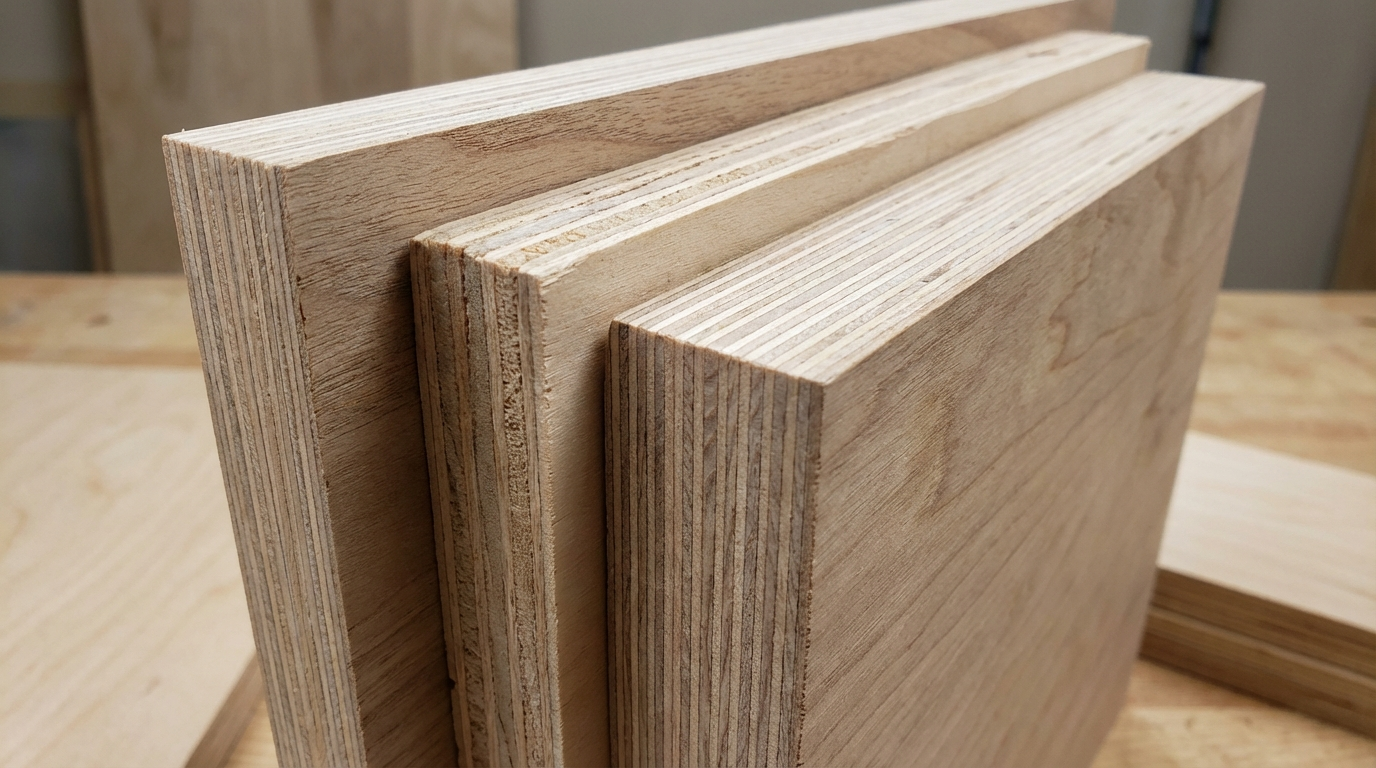
Mistakes: Nominal vs actual thickness (17.5mm sold as 18); no density check (light = weak); ignoring plies count (7+ for 18mm).
- Check: Caliper measure all edges
- Tap test: Hollow = gaps
- Screw hold: 50mm screw no crack
- Edge sand: Smooth glue line
- Smell: Chemical = poor urea
Avoid: Bulk without sample; trust verbal warranties. Verify IS stamp physically.
Trade-offs in Plywood: Cost vs Durability vs Performance
Cheap MR saves 40% upfront but fails fast in humidity (termite/vapour). BWP costs 2x but holds screws 30% better, no warping. Thin saves material but poor span; thick adds weight/logistics.
Finish trade: Plain brown vs veneer (+Rs 15/sq ft, hides joins). Moisture vs aesthetics: HMR (Rs 100+) for kids' rooms. Edge: CNC-ready uniform (+10%) vs hand-cut variable.
When NOT: Budget over wet area; ignore carpenter input. Balance: Mid-BWR for 80% projects.
Tips to Estimate Your Project Budget Accurately
Step 1: Sketch layout, tally sq ft (walls x height - openings). Add 15% waste. Step 2: Select grade/thick, use table rates x1.2 (GST/margin). Step 3: Factor fittings (Rs 20/sq ft edges).
Kitchen ex: 60 sq ft 12mm BWR Rs 5k + edges Rs 1.2k = Rs 7.5k. Bedroom: 80 sq ft 9mm MR Rs 4.5k. Bulk 20 sheets: -10%.
Pro tip: Tier-2 buy, transport save 8%. Verify quotes match table.
Frequently Asked Questions
What is the average plywood price per sq ft in India for 2026?
Average hovers Rs 70-110/sq ft for mid-grade 12-18mm sheets, blending commercial MR and BWR. Tier-1 cities push to Rs 90-130; tier-3 Rs 60-90. This covers poplar cores in dry/semi-wet uses—adjust up 30% for BWP marine or veneer faces. Always compute project total with waste/GST for realism.
How much does an 8x4 plywood sheet cost in India?
Rs 1,500-5,000 for standard thicknesses, e.g., 12mm MR Rs 2,000 avg, 18mm BWP Rs 4,500. Variations from grade (MR low, BWP high), core wood, and dealer location. Southern markets cheaper by Rs 200-400/sheet due to proximity; northern add freight. Bulk drops 5-10%.
Which plywood grade is cheapest for home furniture?
MR commercial grade at Rs 45-85/sq ft suits dry wardrobes/tables. Poplar core keeps costs low, fine for AC interiors. Avoid in kitchens/baths—opt BWR if occasional moisture. Check 7-9 plies for strength; thinner ok for backs.
Why do plywood prices vary by city in India?
Logistics from mills (UP/Bihar hubs), local taxes, dealer competition. Mumbai/Delhi +15-20% freight; Bangalore/Chennai baseline. Monsoon transport spikes 10%. Negotiate in dealer-dense areas; contractors get better.
Is 18mm or 19mm plywood more expensive?
19mm adds Rs 10-20/sq ft (Rs 300-600/sheet) for extra ply/thickness, better screw hold/load. Indian naming: 18mm common MR/BWR, 19mm premium BWP. Choose 19mm for flooring/heavy cabinets; 18mm suffices cabinets.
How to calculate plywood cost for a kitchen?
Measure carcass sq ft (cabinets x depths), add doors/shelves. Typical 40-70 sq ft x Rs 80-120/sq ft BWR = Rs 4k-9k base. +15% waste, edges, GST. Factor carpenter cuts (5% loss if poor).
What affects plywood price the most?
Grade (40% variance: glue/resin), thickness (30%), wood core (poplar cheap, gur dense). Then brand, city, volume. Humidity zones force premium BWP, doubling cost vs MR.
Are there cheaper alternatives to branded plywood?
Unbranded commercial MR saves 20-30% (Rs 40-60/sq ft), fine dry use if inspected (density, plies). Risks: Weaker glue, termites. Branded like CenturyPly/Greenply consistent for critical areas. Verify markings always.
Disclaimer: This content is provided for general informational purposes based on industry practices and publicly available information. Product specifications, standards, prices, and availability may vary by manufacturer, region, and time. Readers should independently verify details with manufacturers, dealers, or qualified professionals before making purchase or construction decisions.
Want Plywood Suggestions?
Share a few details and a Apple Ply specialist will suggest suitable brands and connect you to responsive dealers.