Marine Plywood Price List for India – Waterproof Ply Costs (2026)
2026 Marine plywood (BWP) price list for India. Get typical costs per 8x4 sheet (for 12mm, 19mm, etc.) and tips to ensure you buy genuine waterproof plywood.
Quick Answer
Marine plywood price list for India in 2026 shows typical costs for BWP (boiling water proof) waterproof plywood 8x4 sheets ranging from ₹2,200–₹4,200 for 12mm thickness and ₹3,800–₹6,800 for 18mm, depending on brand tier, core material, city logistics, and dealer margins. Premium options with gurjan face/backs reach ₹5,500–₹8,000 per 18mm sheet in metro cities like Mumbai or Delhi, while economy grades start lower in tier-2 cities. Always verify physical markings for genuine quality before purchase.
- 12mm sheet: ₹2,200–₹4,200 (ideal for cabinets, partitions)
- 18mm/19mm sheet: ₹3,800–₹6,800 (standard for kitchens, furniture frames)
- Per sq ft average: ₹75–₹200, higher in coastal/high-humidity areas
- Key factors: Hardwood core adds 20–30% cost; monsoon season spikes transport prices
- Pro tip: Compare 3 dealers; expect 18% GST extra
- Verify authenticity: Look for IS:710 stamp and boil test edge sample
What is Marine Plywood?
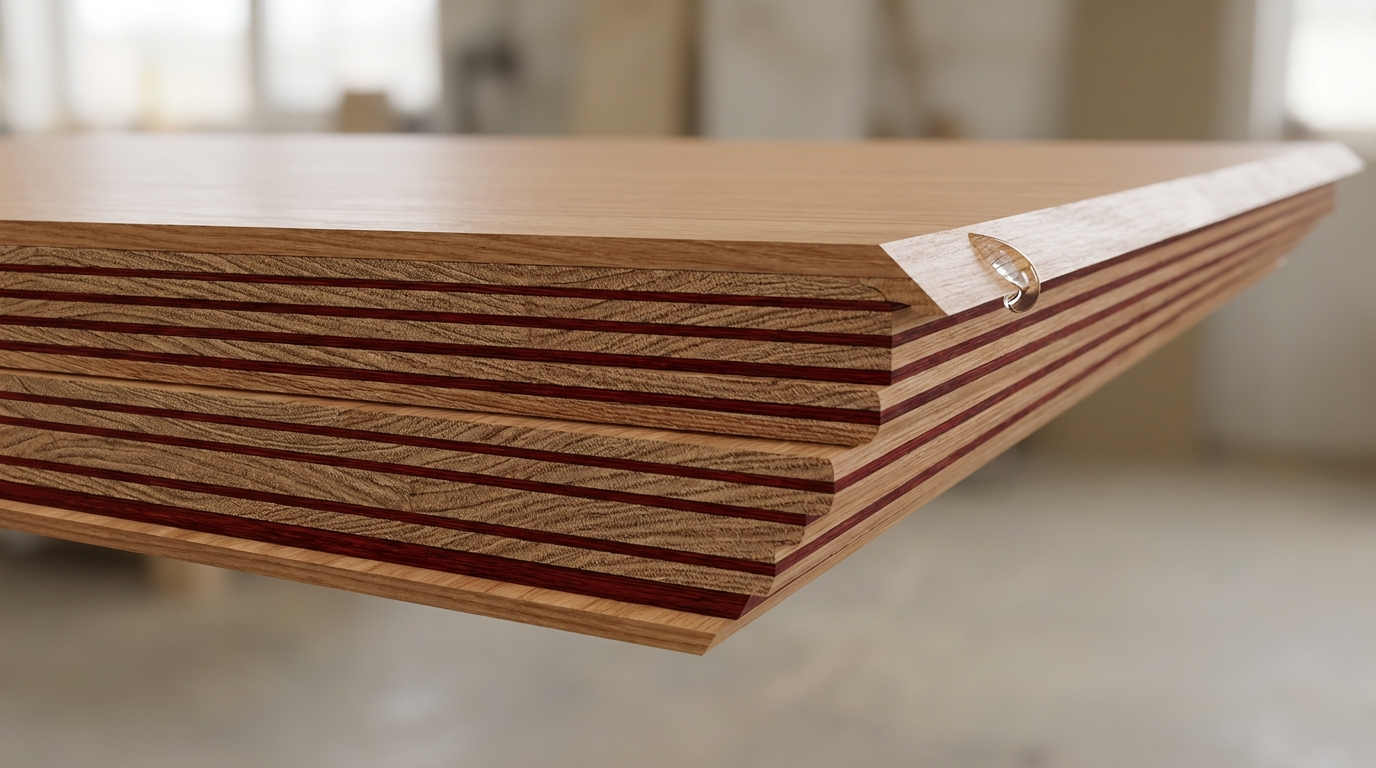
Marine plywood, often called BWP or boiling water proof plywood, stands out in the Indian market for its superior moisture resistance compared to standard MR or BWR grades. It uses phenolic resins in glue lines that withstand prolonged boiling water exposure without delaminating, making it the go-to for high-humidity environments. In practical terms, this means layers of hardwood veneers—typically poplar, eucalyptus, or gurjan—are cross-banded and pressed under high pressure with waterproof adhesives, achieving densities of 0.65–0.75 g/cm³ for strength.
Unlike commercial plywood suited for dry interiors, marine ply handles India's challenging conditions: relentless monsoons in Kerala or Mumbai, coastal salt air in Chennai, or steamy modular kitchens anywhere. Thicknesses follow Indian naming like 18mm (actual 17.5–18.5mm tolerance), with face veneers often 1.0–1.2mm thick for smooth laminates or paints. Why the premium build? Glue must pass 72-hour boil tests per common Indian standards, ensuring no swelling over 8–10% even after submersion.
In Indian homes, this translates to 15–20+ year lifespans in wet zones versus 5–8 years for cheaper alternatives. Builders favor it for bathroom vanities, laundry areas, or boat repairs, while carpenters appreciate its screw-holding (over 200kg pull-out force per screw). However, its weight (50–70kg per 18mm sheet) demands sturdy storage and CNC compatibility checks. Economy versions use mixed cores, risking warping in 90%+ humidity, so core consistency matters most.
Typical Indian use cases include framing under tiles in humid bedrooms or exterior fascia boards. When sourcing, note regional variations: South India prefers lighter eucalyptus cores for easier handling, while North opts for denser hardwoods against winter dryness transitioning to summer sweat. This foundational understanding sets the stage for smart buying amid fluctuating 2026 prices driven by timber imports and fuel costs.
Marine Plywood Price List 2026 for India
The marine plywood price list for 2026 reflects steady rises from timber sourcing (eucalyptus up 10–15% due to export demands) and logistics inflation, yet offers value in waterproof performance. For standard 8x4 sheets (2440x1220mm), expect these typical ranges across tier-1 (Delhi, Mumbai), tier-2 (Pune, Coimbatore), and tier-3 cities. Prices exclude 18% GST and transport (₹200–500/sheet interstate). Brand tiers: Economy (local mills), Mid (Apple Ply, Duroply), Premium (Greenply, Century).
| Thickness | Economy (₹/sheet) | Mid-Range (₹/sheet) | Premium (₹/sheet) | Per Sq Ft Avg. | Best For |
|---|---|---|---|---|---|
| 6–9mm | 1,200–1,800 | 1,600–2,400 | 2,000–3,200 | ₹45–₹90 | Wardrobe backs, shelves |
| 12mm | 2,200–3,200 | 2,800–4,000 | 3,500–4,800 | ₹75–₹140 | Partitions, cabinet sides |
| 15mm | 2,900–4,100 | 3,600–5,000 | 4,500–6,200 | ₹90–₹160 | Door panels, tabletops |
| 18mm | 3,800–5,000 | 4,500–6,000 | 5,500–7,200 | ₹110–₹200 | Kitchen cabinets, beds |
| 19mm | 4,200–5,500 | 5,000–6,800 | 6,000–8,000 | ₹120–₹220 | Heavy furniture frames |
| 25mm | 5,500–7,000 | 6,500–8,500 | 7,500–10,000 | ₹150–₹280 | Workbenches, beams |
Why these ranges? City logistics add ₹300–800 in metros due to GST trucks and unloading; coastal Kerala sees lower base prices (₹60–100/sqft) from abundant rubberwood but higher salt-proof premiums. Gurjan-faced adds 15–25% for export-grade finish. Bulk buys (50+ sheets) shave 10–15%. In 2026, expect 5–8% hike post-monsoon from eucalyptus shortages. Cross-check with local dealers for calibrated edges (smoother CNC cuts) versus raw.
This table empowers quick comparisons, but pair with physical inspections—edge glue lines should be uniform, no voids. Indian buyers save 20% negotiating post-festival seasons when stocks pile up.
How to Choose Marine Plywood (Decision Framework)
Choosing marine plywood boils down to matching exposure risks, load needs, and budget against India's variable climates. Start with use case: high-moisture (kitchens, bathrooms) demands true BWP; semi-wet (living rooms) tolerates mid-grades. Framework: Assess environment (humidity %>70?), structural load (shelves >50kg?), finish plans (laminate or paint?), and lifespan goal (10+ years?). Prioritize core quality—100% hardwood over mixed poplar for delamination resistance.
- Check thickness tolerance: ±0.5mm max; measure multiple spots
- Inspect face grain: Straight, uniform 1–1.5mm thick, no knots >10mm
- Verify markings: IS:710 or BWP stamp, batch code, mill name
- Test weight: 55–65kg for 18mm signals density
- Edge sample boil: 30min in water, no separation
- Ask for warranty proof: 10–20 years on stamp
When NOT to choose marine plywood: Dry interiors like bedrooms (save 40–50% with BWR), tight budgets under ₹80/sqft (risk subpar glue), or lightweight modulars where MDF suffices. In Punjab's arid zones, overkill leads to unnecessary spend. For CNC-heavy projects, opt calibrated variants (+10–15% cost) to avoid blade drags. Indian carpenters note: Pair with SS screws for 30% better hold in humid swings.
This framework cuts regret—80% failures stem from mismatched grades. Visit 2–3 dealers, compare samples under light for resin bleed, and factor carpenter feedback on cut-ability.
Factors Affecting Waterproof Ply Costs in India
Waterproof ply costs fluctuate 20–40% based on raw inputs, regional supply chains, and market dynamics unique to India. Timber core drives 50% variance: Eucalyptus (cheaper, lighter) at ₹70–110/sqft vs gurjan/hardwood (denser, premium) ₹130+. Glue resin—phenolic for true BWP—adds ₹15–25/sqft amid global urea spikes. Thickness scales linearly but ply count jumps costs (18mm=15 plies).
City tiers matter: Mumbai/Delhi logistics (tolls, diesel) inflate 15–25% over Coimbatore hubs. GST at 18% plus 5–10% transport for 100km radii. Brand tiers reflect testing: Economy skips full boils, mid passes IS basics, premium adds termite/chemical proofs. Monsoon stockpiles drop prices 10%, Diwali hikes 8%. Finish (matte, calibrated) +₹10–20/sqft for laminate bonding.
Why this matters in India: Coastal Goa demands salt-resistant faces (+20%), while Hyderabad's heat cycles test glue bonds. Bulk from mills shaves 15%, but retail markups hit 30% in unorganized markets. 2026 forecasts: +7% from import duties on tropical hardwoods. Savvy buyers lock quotes early, verify mill-direct for 10–20% savings.
Why Marine Plywood Matters for Indian Homes
In India's diverse climates—from Mumbai's 90% monsoon humidity to Kolkata's steam baths—marine plywood prevents the swelling and delamination plaguing 60% of standard installs within 3–5 years. It shines in modular kitchens where steam condenses on undersides, or coastal bathrooms fighting salt spray. Unlike BWR (cracks post-24hr soak), BWP endures 72hr boils, retaining 95% strength for tile backings or vanity bases.
Practical edge: Superior screw pull-out (250N vs 150N) suits heavy Indian wardrobes with 100kg loads. CNC-friendly surfaces cut waste 15%, vital for urban carpenters racing deadlines. Why prioritize? Failure cascades: Warped cabinets leak ₹50,000 remodels. In tier-2 growth cities like Jaipur, rising AC condenses demand waterproof frames. Coastal Kerala sees 2x lifespan vs interiors, justifying premium.
Trade secret: Pair with epoxy sealants on cuts for 25% extra life. In high-rise societies, it resists termite migrations via plumbing voids. This isn't luxury—it's insurance against rework in humid belts covering 70% of India.
Common Mistakes When Buying Marine Plywood
Indian buyers often fall for visual gloss over substance: Dealers push "marine-grade" labels on BWR fakes, causing 40% early failures. Mistake 1: Ignoring core voids—tap edges for hollow thuds signaling air pockets that swell first. Carpenter error: Under-specifying thickness (12mm fails heavy shelves). Budget trap: Cheapest ₹60/sqft skips boil-proof glue, delaminating in first monsoon.
Dealer tricks: Faded stamps or missing batch codes hide rejects. Buyers skip samples, regretting mismatched tones post-laminate. Overlooking tolerance: +1mm sheets warp on frames. Quick inspections: Weigh sheet (under 50kg=light core), scratch face (no white powder=good resin), flex center (minimal bow). Carpenter mistake: No pre-drill, splitting edges in humid swells.
Avoid by insisting on edge boil demo (genuine survives 20min). Bulk without moisture meter (under 12% ideal). In 2026's market, verify digital invoices for traceability. These checks save 30% lifetime costs.
Trade-offs and Limitations of Marine Plywood
Marine plywood excels in wet durability but trades off on weight, cost, and dry performance. At 60–70kg/sheet, it's tougher to handle than 40kg commercial ply, straining solo carpenters in tight sites. Cost 2–3x BWR limits dry-use ROI—use BWR for bedrooms, save 40%. Screw-holding supreme in moisture but overkill (and brittle) in arid Rajasthan.
Finish limitations: Rougher grain needs sanding (+labor), less paint-absorbent than MR. Thickness rigidity resists flex but complicates curves for arches. Termite resistance via density, but untreated cores invite borers in infested North India—add pre-treatment. Edge cases: Avoid outdoors unpainted (UV fades faces); not fire-rated without extras.
Vs alternatives: BWR cheaper for occasional splashes, MDF smoother/cheaper for panels. In India, balance via hybrids: Marine frames + BWR tops. Lifespan trade: 20yrs wet vs indefinite dry with care. Know limits to optimize spends.
Installation and Maintenance Tips for Longevity
Proper install maximizes marine plywood's edge: Acclimatize sheets 48hrs at site humidity to prevent cupping. Use SS screws (no rust migration), pre-drill 80% depth for 30% hold boost. Seal all cuts with epoxy within 2hrs—unsealed edges absorb 5x moisture. For kitchens, elevate 10cm off floors against splashes.
Maintenance: Wipe spills instantly; annual silicone sealant on joints fights cracks. In monsoons, dehumidifiers preserve glue. Carpenter tip: Stagger seams, use MBR-grade laminates for synergy. Avoid overloads >150kg/sqmt. These extend life 5–10yrs, outpacing neglect cases failing at 7yrs.
Why India-specific? Fluctuating 40–95% RH demands vigilance; coastal salt erodes iron screws fast. Track via moisture meters (₹500 tool saves thousands).
FAQ
What is the average price of 18mm marine plywood 8x4 sheet in India 2026?
Average 18mm marine plywood 8x4 sheet prices hover at ₹4,500–₹6,500 across India in 2026, with economy options dipping to ₹3,800 in South hubs like Coimbatore and premiums hitting ₹7,200 in Delhi due to transport and brand testing. This range accounts for hardwood cores and phenolic glues; add 18% GST. Metro variances stem from diesel costs—always get 3 quotes and verify IS stamps for value.
Is marine plywood the same as BWP plywood?
Yes, marine plywood is essentially BWP (boiling water proof) grade, designed for extreme moisture via phenolic resins surviving 72-hour boils without failing. In India, it's often stamped IS:710, distinguishing from BWR (24-hour resistant). Practical difference: Marine for constant wet like bathrooms, BWR for occasional spills. Check labels—fake "marine" on BWR costs less but swells in monsoons.
How to spot fake marine plywood at dealers?
Spot fakes by boiling a 10x10cm edge sample 30 minutes—no delamination or swelling over 5%. Genuine shows uniform glue, IS:710 stamp crisp, core consistent (no soft spots). Weigh: 55kg+ for 18mm. Scratch test: No powdery residue. Indian dealers mix rejects; insist on mill-fresh batches. These field checks catch 90% frauds.
What thicknesses are best for kitchen cabinets in humid India?
For humid Indian kitchens, 18mm marine plywood suits frames and shutters (strong against steam), 12mm for backs/doors. 19mm for base slabs handles 100kg loads. Thicker resists sagging in 80%+ RH; lighter saves weight/cost. Carpenters prefer even plies for balance. Verify tolerance to avoid frame gaps.
Does marine plywood need special treatment for termites?
Marine plywood's density deters termites better than MR, but untreated cores invite attacks in infested belts like UP/Bengal. Opt delite/chemical-treated variants (+10% cost) or apply borate pre-install. In India, pair with soil barriers for ground floors. Lifespan drops 50% untreated; check stamp for proofs.
Can marine plywood be used outdoors in India?
Yes, but seal all sides with marine epoxy/paint yearly against UV/rain—unsealed fades in 2 years. Ideal for verandas, gates in coastal areas. Limitations: Not fully marine (boat-grade) vs Indian weather; edges swell if exposed. Prefer shaded installs; outperforms commercial 3x in durability.
How much does city affect marine plywood prices?
Cities impact 15–30%: Mumbai/Delhi ₹5,500+ for 18mm (logistics), vs ₹4,200 in Kerala (local mills). Tier-3 like Bhopal saves 20% but quality varies. Fuel/GST trucks explain gaps; bulk interstate evens it. Shop hubs like Kirti Nagar (Delhi) for deals.
What warranty to expect on genuine marine plywood?
Genuine marine offers 10–25 year warranties against boil/delamination/termites, stamped on sheet. Premium brands extend to 30yrs with conditions (proper install). In India, enforce via serials; voids from bad storage. Real-world: 15yrs common in humid use with maintenance.
Disclaimer: This content is provided for general informational purposes based on industry practices and publicly available information. Product specifications, standards, prices, and availability may vary by manufacturer, region, and time. Readers should independently verify details with manufacturers, dealers, or qualified professionals before making purchase or construction decisions.
Want Plywood Suggestions?
Share a few details and a Apple Ply specialist will suggest suitable brands and connect you to responsive dealers.