How to Choose Good Quality Plywood – 5 Key Steps
Step-by-step guide to identify good quality plywood. Learn how to check grade, ISI marks, core gaps, and more to ensure you get the best material.
Step 1: Start with Plywood Grade – Match It to Your Needs
Plywood grades form the foundation of quality assessment because they dictate moisture resistance, durability, and suitability for specific uses. In India, where homes face everything from dry heat to relentless monsoons, selecting the right grade prevents warping, delamination, and costly repairs. The main grades are Moisture Resistant (MR), Boiling Water Resistant (BWR), and Boiling Water Proof (BWP). MR works for low-humidity interiors like bedrooms but fails in kitchens or bathrooms due to steam and splashes. BWR handles moderate exposure, ideal for modular kitchens in urban apartments, while BWP stands up to submersion, perfect for coastal South India homes battling salty air and humidity.
Why does grade matter so much? Lower grades use weaker adhesives that break down under India's variable climate, leading to bulging panels after the first rainy season. Higher grades employ phenolic resins, creating stronger bonds between veneers. Check the edge marking clearly stamped on the sheet – it should read something like "BWP – IS:303" without fading or smudges. In dealer yards, especially in Kerala or Tamil Nadu, insist on seeing multiple sheets; fakes often have inconsistent stamping.
For Indian buyers, consider your project's exposure. In a Chennai modular kitchen with constant cooking vapors, BWP avoids the fate of cheaper MR sheets that peel after six months. Trade carpenters swear by this step because mismatched grades lead to callbacks. If buying for furniture, MR suffices, but always prioritize based on end-use to balance cost and longevity.
Practical tip: Hold the sheet at an angle under light. Genuine high-grade plywood shows uniform color and no bubbling from the factory. This visual cue, combined with grade marking, gives confidence before deeper checks. South Indian carpenters often share stories of clients skimping here, only to face swollen cabinets during Onam festivities.
Grades Breakdown for Common Indian Projects
| Grade | Best For | Limitations | Indian Climate Fit |
|---|---|---|---|
| MR | Interior furniture, wardrobes | Not for wet areas; swells easily | Dry interiors like North India bedrooms |
| BWR | Modular kitchens, bathrooms | Short-term boiling only | Urban humidity, Mumbai rains |
| BWP | Coastal exteriors, heavy-duty | Higher cost | South India monsoons, marine exposure |
This table simplifies choices, but always cross-verify with usage. In practice, over-specifying saves headaches.
Step 2: Verify ISI Mark and Certification – India's Quality Assurance
The ISI mark from the Bureau of Indian Standards (BIS) ensures the plywood meets national safety and performance benchmarks, tested for strength, formaldehyde emission, and glue shear. Without it, you're gambling with subpar material prone to toxic off-gassing or structural failure. In crowded Indian markets, from Delhi's Chawri Bazar to Coimbatore's dealer hubs, unbranded sheets flood shelves at tempting prices, but they crumble under load.
Locate the ISI mark on the edge or face – it should include license number, batch details, and grade. Scratch it lightly; genuine marks don't flake. Why prioritize this in India? Local manufacturing varies wildly, and without BIS oversight, adhesives might release harmful fumes, worsening indoor air in poorly ventilated homes. For South India's CNC-cut modular setups, certified plywood ensures precise machining without chipping.
Dealers often push uncertified stock as "equivalent," but test it yourself: Tap the surface – solid thud means quality glue; hollow sound signals voids. In monsoon-prone areas like Kerala, uncertified sheets absorb water like sponges, fostering termites. Carpenters advise buying BIS-marked for guarantees, as it correlates with better warranty claims.
Edge case: Even BIS-marked can vary by mill, so combine with physical tests. This step weeds out 70% of duds in dealer-driven buys, common in tier-2 cities.
How to Spot Fake ISI Marks
- Fuzzy or printed-on logos vs. embossed
- Missing license numbers
- Inconsistent font across sheets
Master this, and you'll navigate markets like a pro.
Step 3: Inspect Core Gaps, Layers, and Veneer Quality – Look Inside the Build
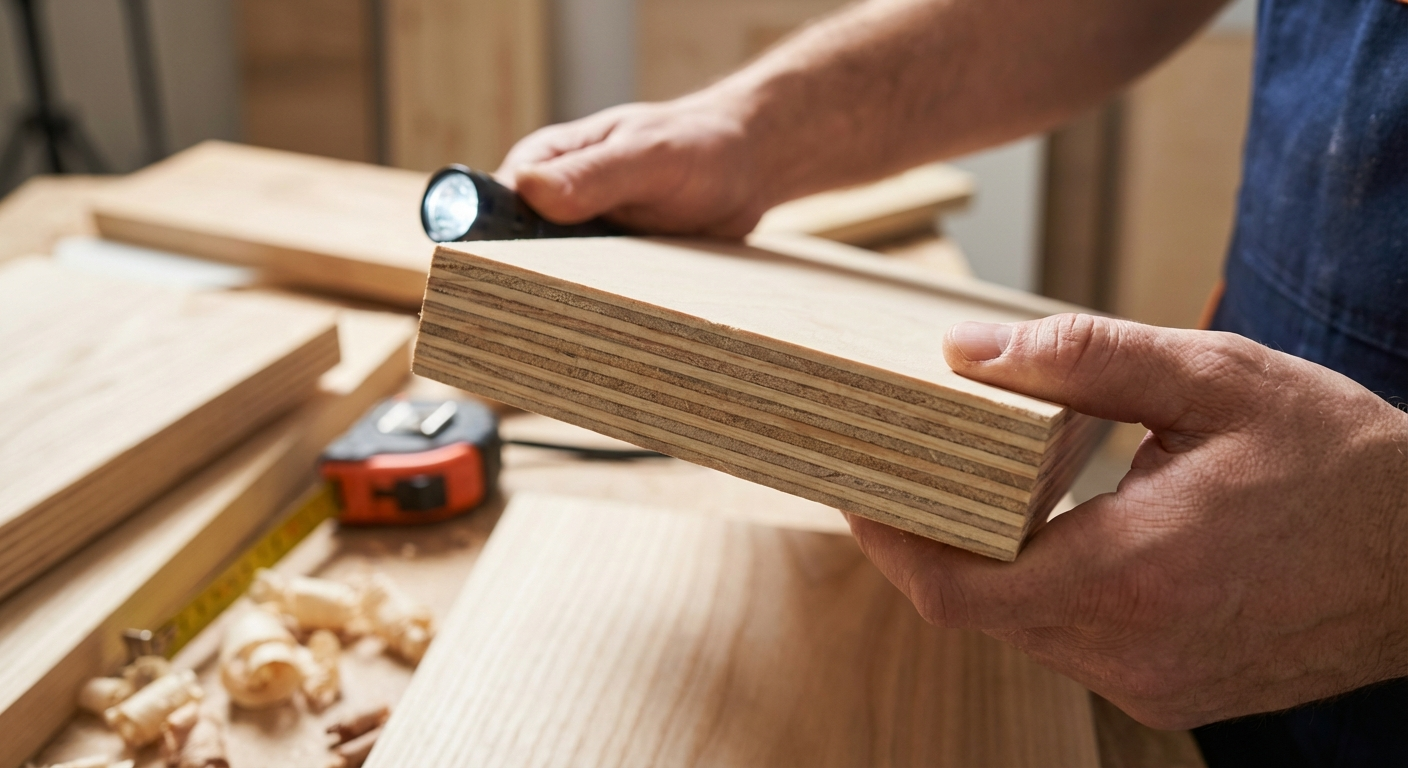
The core makes or breaks plywood strength; gaps or thin layers mean weak spots that buckle under screws or weight. Premium sheets have 5-9 uniform poplar or eucalyptus veneers with no air pockets larger than 2mm. In India, where furniture bears heavy loads like steel almirahs, core integrity prevents sagging shelves.
Examine edges: Smooth, tight layers without gaps indicate quality pressing. Pry gently with a knife – resistance shows strong glue lines. Core gaps trap moisture, accelerating rot in humid Bangalore basements. South Indian coastal buyers face amplified risks from salt-laden winds penetrating flaws.
Layer count matters: Thicker sheets need more plies for stability. Odd numbers distribute stress evenly, reducing warp. Common failure: Dealers palm off hardwood core plywood as softwood – heavier but prone to cracking in dry spells. Weigh a sample; uniform density rules.
This step reveals hidden defects. In modular kitchen CNC work, flawless cores ensure router bits glide without tear-out, saving fabrication time.
Core Inspection Checklist
Run your hand along edges for bumps. Shine a light through – no dark voids. For 18mm sheets, expect 11-13 layers. Deviations spell trouble.
Step 4: Test Moisture Resistance and Glue Line Strength – Simulate Real Conditions
Moisture wreaks havoc in India, so test by sprinkling water on the surface – beads should form, not soak in after 30 minutes. Glue lines, visible on edges, must be thin (1-2mm) and dark, indicating phenolic resin over urea-formaldehyde, which dissolves in humidity.
In South India's monsoons, weak glue delaminates panels, turning wardrobes into mush. Press thumbnails into glue lines – no dent means superior shear strength. Boil test for BWP: Submerge scraps; intact after 6 hours confirms claim.
Carpenters in modular setups emphasize this for longevity. Trade-off: Waterproof glues cost more but outlast cheaper options 3x in kitchens.
Why India-specific? 80% humidity spikes demand resilience; failures peak post-rains.
Quick Field Tests
- Water drop test
- Screw holding: Drives straight without splitting
- Flex test: Slight bend, no crack
Step 5: Evaluate Surface Finish, Thickness Uniformity, and Emissions – Final Polish Checks
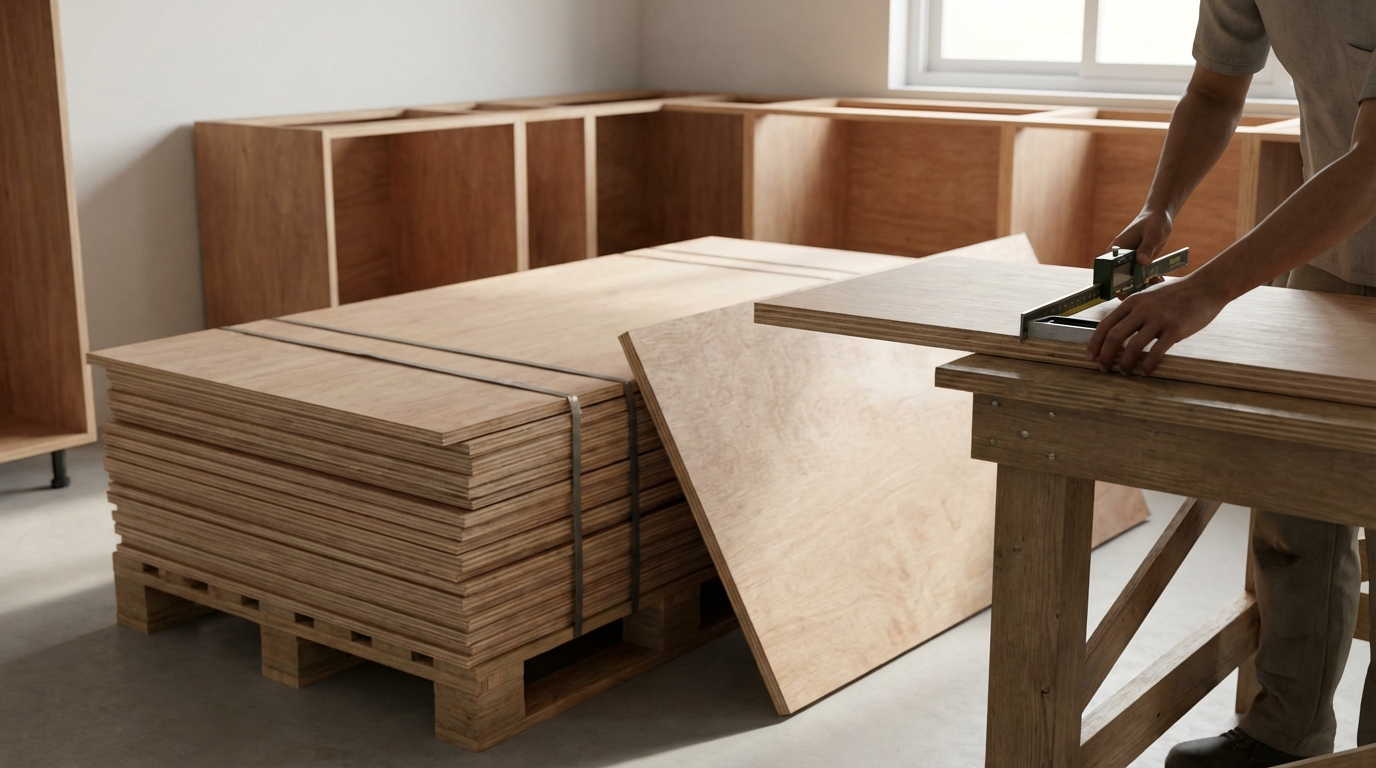
Smooth, sanded surfaces ensure paint adhesion without sanding hassles. Calipers check thickness variance under 0.5mm per sheet. Low-emission glues prevent headaches in closed rooms.
In dealer yards, stack sheets – uniform edges. Sniff: Chemical whiff signals high formaldehyde. For CNC, mirror finishes prevent jams.
South India modular kitchens shine with quality faces. Avoid glossy fakes that bubble under varnish.
Surface Quality Signs
No patches, consistent grain. This completes the 5 steps, ensuring all-round quality.
Common Mistakes Indian Buyers and Carpenters Make When Buying Plywood
Buyers chase lowest prices, ignoring grades, leading to warped furniture after monsoons. Carpenters overlook core gaps, causing screw pull-outs in kitchens. Dealers mix grades; always verify markings.
In South India, coastal neglect of BWP results in peeling cabinets. Mistake: Trusting verbal claims over inspections. Another: Bulk buys without samples. Real case: Chennai family’s modular kitchen failed in year one due to MR plywood.
Avoid by following steps religiously. Dealers pressure quick decisions – insist on time.
Carpenter pitfall: Prioritizing cut speed over quality, leading to callbacks. Educate yourself to counter.
Why Plywood Quality Matters Uniquely in Indian Climates and Lifestyles
India's diversity – Himalayan dry to Malabar humidity – demands robust plywood. Monsoons swell cheap sheets; coastal salt corrodes glues. Modular kitchens with steam need BWP.
In South India, CNC carpentry thrives on quality stock for precision. Poor choices amplify termite risks in humid zones. Long-term: Quality saves 2x replacement costs.
Why explain? Empowers confident buys amid dealer hype.
Trade-offs, Limitations, and When NOT to Choose Certain Plywood Types
BWP excels but costs 30-50% more; reserve for wet areas. MR cheap but limits to dry zones. Solid wood alternatives for heirlooms, but plywood faster for modern homes.
Limitations: No plywood fully termite-proof; pair with treatments. Edge cases: Extreme heat warps all; ventilate.
When not: Budget projects under 10k – skip plywood for particleboard.
Your Plywood Decision Framework: A Step-by-Step Narrative Guide
Assess project: Interior? MR. Kitchen? BWR min. Coastal? BWP. Budget check: Allocate 40% to plywood. Inspect per steps. Test samples. Buy from reputed dealers.
| Project Type | Recommended Grade | Key Checks | Budget Tip |
|---|---|---|---|
| Wardrobe | MR/BWR | Core, surface | Mid-range |
| Modular Kitchen | BWR/BWP | Moisture, glue | Premium |
| Bathroom Vanity | BWP | ISI, gaps | Invest here |
This framework streamlines choices for Indian homes.
Frequently Asked Questions About Choosing Good Quality Plywood
What is the difference between MR, BWR, and BWP plywood?
MR resists casual moisture like spills but not boiling water, suiting dry interiors. BWR withstands short boils, good for kitchens. BWP survives prolonged submersion, essential for bathrooms. Differences stem from glue types – urea for MR, phenol-modi for higher grades – affecting bond strength in humidity.
Is ISI mark enough to guarantee quality?
No single mark suffices; pair with physical inspections. ISI ensures baseline standards, but mill variations exist. Always check core and moisture separately for full assurance.
How do I check for core gaps at a dealer?
Examine edges under light for voids. Tap for hollow sounds. Knife test reveals separations. In busy yards, demand unstacked sheets.
Why does plywood warp in Indian monsoons?
Weak grades absorb humidity unevenly, swelling cores. Quality ones have balanced veneers and resistant glues, maintaining flatness.
Can I use MR plywood for South India kitchens?
Avoid; steam and humidity degrade it fast. Opt BWR/BWP for modular setups to prevent delamination.
How thick should plywood be for furniture?
18mm for shelves, 12mm for doors. Uniformity prevents sags under loads like books or clothes.
What if the price seems too good?
Scrutinize harder; bargains hide thin veneers or fake marks. Quality reflects in weight and tests.
Do I need BWP for coastal homes?
Yes, salt accelerates corrosion; it protects against marine exposure better than others.
Disclaimer: This content is provided for general informational purposes based on industry practices and publicly available information. Product specifications, standards, prices, and availability may vary by manufacturer, region, and time. Readers should independently verify details with manufacturers, dealers, or qualified professionals before making purchase or construction decisions.
Want Plywood Suggestions?
Share a few details and a Apple Ply specialist will suggest suitable brands and connect you to responsive dealers.